
Relocation
Moving to Las Vegas: 6 Questions to Ask Before Choosing a Home
Before moving to Las Vegas, compare your daily routes, housing and ownership costs, summer comfort, community rules, and moving timeline. A focused scouting trip can help you understand how specific homes and locations fit your life before you commit.
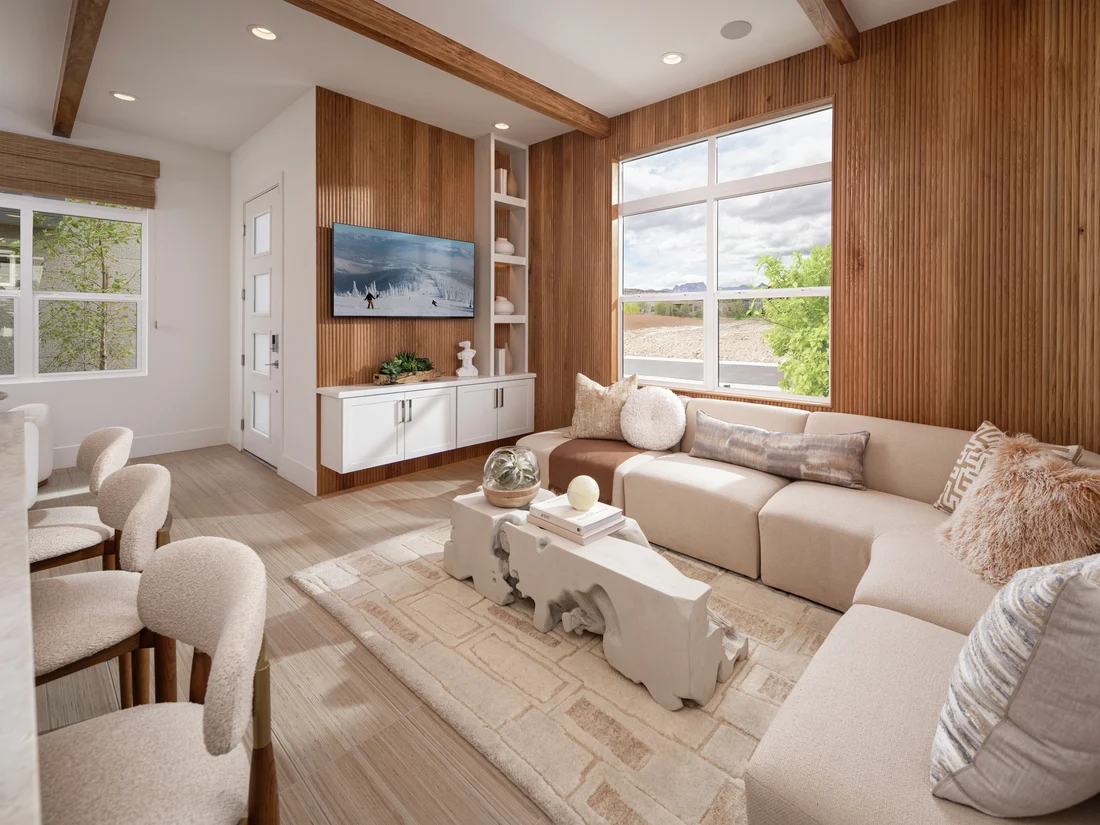
Liten model home at The Loughton, Summerlin. Photo courtesy of Toll Brothers.
It’s easy to picture a fresh start when you’re looking at homes online. The harder part is imagining where you’ll buy groceries, how the afternoon drive will feel, and whether that beautiful backyard is somewhere you’ll actually spend time.
Those details deserve attention, too.
Zen’s goal is to help you get comfortable with the place you’re choosing—not just excited about the house. These six questions are a good place to begin.
1. Where in the Las Vegas Valley will my everyday life happen?
Start with the places you need to reach regularly. Then compare homes around that routine.
Write down your work location, appointments, activities, airport trips, and anything else that brings you out of the house each week. If you work remotely, consider your workspace and verify internet-service options for the address.
A home that looks close on a map may involve a drive you don’t enjoy. Check routes at the times you would actually use them, and drive the important ones during your visit when practical.
Try this before browsing another listing:
| Your regular destination | How often you go | Travel time you would be comfortable with |
|---|---|---|
| Work or shared workspace | Your schedule | Your preference |
| Recurring appointments | Your schedule | Your preference |
| Activities, fitness, or recreation | Your schedule | Your preference |
| Airport | Your schedule | Your preference |
| Friends or family nearby | Your schedule | Your preference |
Whether you’re considering Summerlin, Henderson, Southern Highlands, or another area, compare specific addresses against the same priorities.
If schools matter to your move: Use the Clark County School District’s address-based zoning resources, then confirm current assignments and relevant programs directly with the district. A neighborhood name or listing description is not enough to establish school assignment. Clark County School District (CCSD)
The most useful question is: “Which location makes the week I actually live easier?”
2. How can I make a scouting trip genuinely useful?
Give yourself time to experience the area between showings.
A trip packed with back-to-back homes can leave you remembering countertops while forgetting which location felt right. Group appointments geographically and build in time for ordinary things: a grocery stop, a drive to work, or a walk through a place you would visit regularly.
Here is a sample two-day plan to adapt:
| Time | What to do | What you’re trying to learn |
|---|---|---|
| First morning | Drive an important weekday route | Whether the location fits your routine |
| First afternoon | Tour a small group of homes in one area | Which layouts and property types suit you |
| First evening | Return to a promising location | How activity, parking, and noise differ |
| Second morning | Explore a contrasting area | Which tradeoffs you prefer |
| Second afternoon | Revisit your strongest options | Whether your first impression still holds |
After each home, write down three things: what worked, what didn’t, and what you still need to verify.
Photos help you remember a room. Those notes help you remember your judgment.
If new construction is on your list, contact your agent before visiting or registering online so you can confirm each builder’s registration process. Take the Las Vegas new construction guide with you to compare lots, included features, and builder terms.
A Bay Area buyer’s Las Vegas scouting example
A buyer from Castro Valley and his wife were new to the Las Vegas area. In his review, he recalls feeling nervous at first and says Zen showed them several homes and gave them time to get comfortable with the options before they chose one. Read the buyer’s account on Yelp.
Zen moved from San Francisco to Las Vegas herself. For buyers making that move, she recommends leaving room for a second look. Tour a small group of homes, pick the two that fit your routine best, and drive one everyday route from each. Then revisit your favorite at the time of day you’d normally be coming home.
3. What will this home feel like during a Las Vegas summer?
Look beyond whether the air conditioning is running during the showing. Consider the home’s orientation, shade, cooling equipment, and how you intend to use the space.
Las Vegas has a hot desert climate, and conditions vary across the valley. The National Weather Service’s local climate resources provide useful context when planning your move. National Weather Service climate summary
During a tour, notice:
- Afternoon sun through the main living-area windows.
- Shade where you would sit outside.
- The location of bedrooms and workspaces.
- Cooling-system information and available service records.
- Covered parking and the garage layout.
- Outdoor routes and spaces you expect to use regularly.
Ask for utility history if available, ideally covering different seasons. Treat it as context rather than a prediction: thermostat settings, occupancy, equipment, and rates can affect your own bills.
A useful question: “If I toured this home in January, what would I still need to understand about living here in July?”
A patio can be lovely in winter. Its shade deserves a second look before you plan every summer dinner outside.
4. What will living here cost beyond the purchase price?
Build a property-specific budget before deciding that one home is more affordable than another.
The purchase price matters, but so do the features and responsibilities that come with it.
| Cost | What to investigate |
|---|---|
| Mortgage payment | A lender estimate based on your financing |
| Property taxes | An appropriate estimate for the property and your purchase |
| Insurance | A quote for the specific home and intended use |
| HOA dues | All applicable associations and what each covers |
| Assessments | Additional charges or balances to investigate |
| Utilities | Available history and the services you would pay for |
| Maintenance | Cooling equipment, landscaping, pool care, and other needs |
| Moving and setup | Travel, movers, storage, window coverings, and immediate work |
Keep recurring expenses separate from one-time moving costs. Also avoid counting taxes and insurance twice if your mortgage estimate already includes them.
Zen’s suggestion: Compare two complete ownership budgets side by side.
A lower purchase price may come with more maintenance. A higher-priced home may include features you would otherwise pay to add. Neither is automatically the better choice; you want to understand the difference.
5. What rules and local details should I understand before choosing a community?
Start with the exact property address and the documents that apply to it.
A Las Vegas mailing address does not necessarily mean a home is within the City of Las Vegas. A substantial part of the valley is in unincorporated Clark County, which matters when identifying the responsible local authority. Clark County jurisdiction guide
If the property belongs to an HOA, review the governing documents and available financial information. Focus on the things that could affect your plans:
- Parking and vehicle storage.
- Exterior changes and landscaping.
- Leasing restrictions.
- Pet-related provisions.
- Community amenities and access.
- Dues and assessments.
Ask about your actual intention:
“I’d like to add a patio cover and park a second vehicle outside. Which rules or approvals would apply?”
That is more useful than simply asking whether the community has restrictions.
If access to healthcare or another recurring service is important, check availability directly with the provider. Being nearby and accepting new patients are different questions.
6. Should I buy before moving, or give myself time to settle in?
That depends on how well you know the area, your housing timeline, and how much flexibility you need.
Buying before the move may suit someone with a clear location preference and a coordinated transaction. Renting first may give someone unfamiliar with the valley time to test daily life before choosing a long-term home.
| Approach | Potential benefit | Tradeoff to consider |
|---|---|---|
| Buy before relocating | One main move into your intended home | More decisions and coordination from a distance |
| Rent before buying | Time to explore and refine your priorities | A second move and lease commitments |
| Use temporary housing | Flexibility during the transition | Availability, storage, and potentially higher short-term costs |
For an out-of-town purchase, decide early which tours, inspections, and walkthroughs you want to attend. Ask your lender and closing team what can be handled remotely and what arrangements are required.
Build a backup plan for delays before scheduling movers around an expected closing date. The Las Vegas homebuying guide explains what usually happens between an accepted offer and getting the keys.
You don’t have to force every part of the move into the same week. A little flexibility can make the transition easier to manage.
Your Las Vegas relocation checklist
Before narrowing your home search, make sure you can answer these:
- Which destinations shape my normal week?
- Which addresses fit my preferred travel times?
- What do I need to learn during a scouting trip?
- How would the home work in summer?
- What are the recurring costs and one-time moving expenses?
- Which community rules affect my plans?
- What needs direct verification, such as schools or service availability?
- Do I want to buy immediately or spend time here first?
- What is my backup plan if the timing changes?
You don’t need perfect answers to start. Knowing what remains uncertain gives Zen a useful place to begin.
Further reading
Plan a visit that answers your questions
Tell Zen where you’re moving from, your approximate timeline, and the places or routines your new home needs to accommodate.
Zen can help you work through the areas you’re considering and what to prioritize during your visit, so you leave with more clarity about where you want to live.